
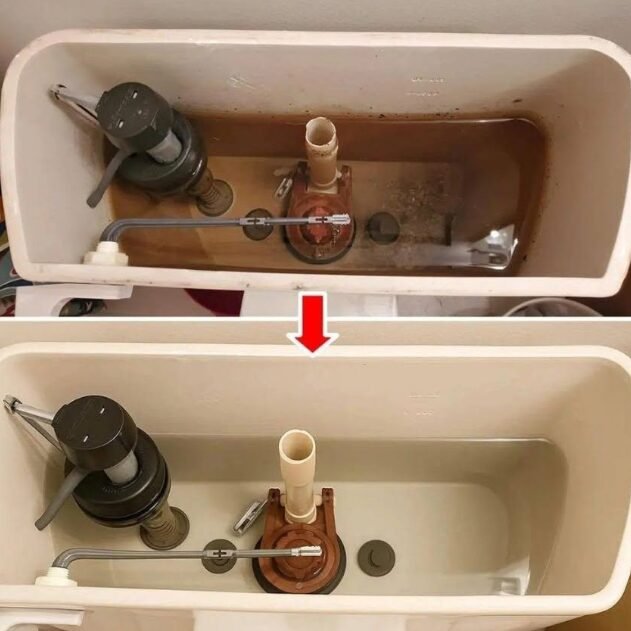
The secret behind knowing how to clean your toilet flush and make it look like new comes down to simple chemical reaction principles. Tap water contains minerals like calcium, magnesium, and iron oxides that precipitate out of standing water over months of continuous exposure. These deposits build up as hard water scale and rust rings along the waterline inside porcelain porcelain basins.
Using mild acids like distilled white vinegar (acetic acid) lowers the pH to break apart stubborn mineral bonds without damaging glazed porcelain surfaces or rubber flappers. Removing these mineral crusts prevents internal water channels from clogging, which ensures strong flushing pressure and prevents hidden leaks.
Hidden Benefits of Deep Cleaning Your Toilet Tank
- Restores Maximum Flush Power: Clears obstructed jets and mechanisms, allowing water to flow into the bowl at peak speed.
- Eliminates Unpleasant Bathroom Odors: Removes stagnant organic slime and bacteria that cause persistent stale smells. 🌿
- Extends Life of Internal Plumbing Parts: Prevents premature degradation of rubber gaskets, flapper seals, and plastic fill valves.
- Prevents Permanent Porcelain Staining: Stops rust particles from washing down into the lower bowl continuously.
Important Safety Warnings & Mistakes to Avoid
While restoring your toilet tank is straightforward, avoiding a few common errors keeps your plumbing fully protected:
- Never Pour Bleach Directly in the Tank: Concentrated bleach deteriorates internal rubber flappers and silicone seals rapidly, leading to constant running water leaks.
- Avoid Boiling Water: Pouring boiling water into a cold porcelain tank can cause the ceramic basin to crack instantly under thermal shock.
- Do Not Force Plastic Mechanisms: Apply gentle pressure when scrubbing plastic fill valves and arms to avoid snapping delicate levers. ⚠️
Essential Metrics & Maintenance Breakdown
| Cleaning Factor | Recommendation / Value |
|---|---|
| Recommended Frequency | Deep clean once every 6 months |
| Soaking Solution Time | 30 to 60 minutes for severe scale buildup |
| Primary Active Agent | Distilled White Vinegar (5 percent acetic acid) |
| Water Valve Direction | Clockwise to close; Counter-clockwise to open |
