
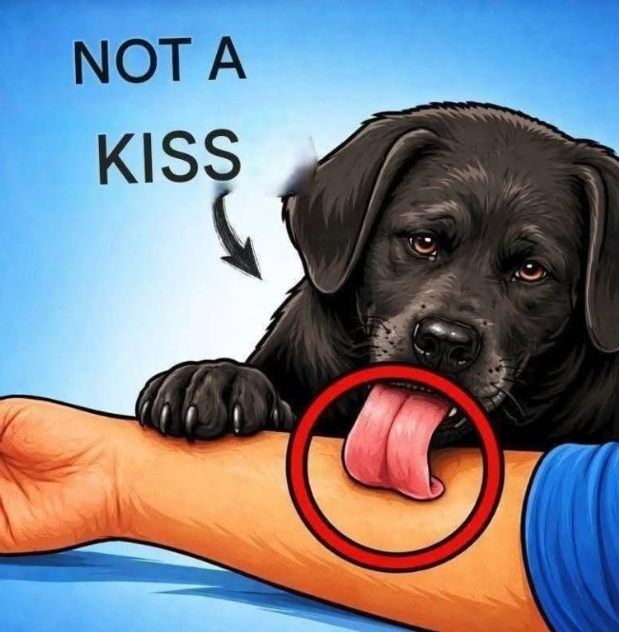
Why Do Dogs Lick People?
Dogs may lick people to show affection, gather information about their environment, seek attention, or engage in instinctive social behaviors.
Licking is a natural canine behavior that serves both social and biological purposes.
Studies suggest that licking triggers the release of endorphins in a dog’s brain, which can promote feelings of calmness and relaxation. This response is also associated with dopamine release, a neurotransmitter linked to pleasure and motivation.
Because licking can be rewarding and self-soothing, many dogs use it as a way to interact with the people and environments around them.
There is no single reason dogs lick humans. The motivation often depends on the situation, the person being licked, and the dog’s individual personality and experiences.
Psychology
Dogs Learn To Lick as Puppies
Dogs begin learning the importance of licking from birth, using it as a tool for communication, comfort, and social bonding.
Mother dogs instinctively lick their puppies immediately after birth to clean them and stimulate normal bodily functions.
During the first few weeks of life, puppies rely on their mother’s licking to help trigger urination and defecation. As a result, dogs learn very early that licking plays an important role in interacting with the world around them.
As puppies mature, they continue using licking as a social behavior. They may lick their mother or other adult dogs as a sign of appeasement and to encourage positive social interactions.
Puppies also lick one another to show affection, strengthen social bonds, and sometimes comfort themselves or their littermates.
Dogs Lick People To Explore Smells and Tastes
Dogs often lick people because it helps them gather information about scents and tastes that their powerful noses find interesting.
Although dogs can detect bitter, salty, sweet, and sour flavors, they rely much more heavily on their sense of smell than their sense of taste when exploring their environment.
This helps explain why dogs are often drawn to body parts with stronger scents and flavors, such as hands, faces, ears, and feet.
Human sweat plays a role in this behavior. We have two types of sweat glands:
- Eccrine glands, which produce a thin, mostly odorless fluid and are concentrated on the palms, soles of the feet, forehead, cheeks, and armpits.
- Apocrine glands, which produce a thicker secretion that interacts with skin bacteria to create body odor and are found in areas such as the armpits, groin, ear canals, eyelids, and nostrils.
Because these areas contain unique combinations of scent compounds, dogs may find them especially interesting to investigate through licking.
Why Do Dogs Lick Your Hands?
Dogs often lick your hands because they are covered in scents, tastes, and information about where you’ve been and what you’ve touched.
Throughout the day, your hands come into contact with people, animals, food, and countless other objects. To your dog, your hands act like a roadmap that helps tell the story of your day.
By licking and smelling your hands, your dog can gather information about different places, experiences, and scents you encountered.
Your palms also contain sweat glands that leave behind a slightly salty residue, which many dogs find appealing.
The combination of interesting smells, flavors, and social interaction helps explain why hand-licking is such a common behavior in dogs.
Why Do Dogs Lick Your Face?
Dogs often lick your face because it contains interesting scents, tastes, and social signals that they naturally want to investigate.
Like your hands, your face is constantly exposed to the environment and picks up a variety of smells throughout the day. Because people frequently touch their faces, additional scents from food, objects, and other people may also be transferred there.
Your face contains both major types of sweat glands. Eccrine glands on the forehead and cheeks leave behind a slightly salty taste that many dogs enjoy.
Apocrine glands around the eyelids and nostrils produce unique scent compounds that are easily detected by a dog’s highly sensitive nose.
Food-related smells on your lips and around your mouth may also attract dogs, which helps explain why some dogs seem especially eager to lick your face after you eat.
Face licking is not only about smell and taste, however. Dogs commonly lick one another’s faces as part of social bonding, grooming, affection, and appeasement behaviors.
In many cases, licking your face may be your dog’s way of expressing familiarity, affection, or friendly intentions.
