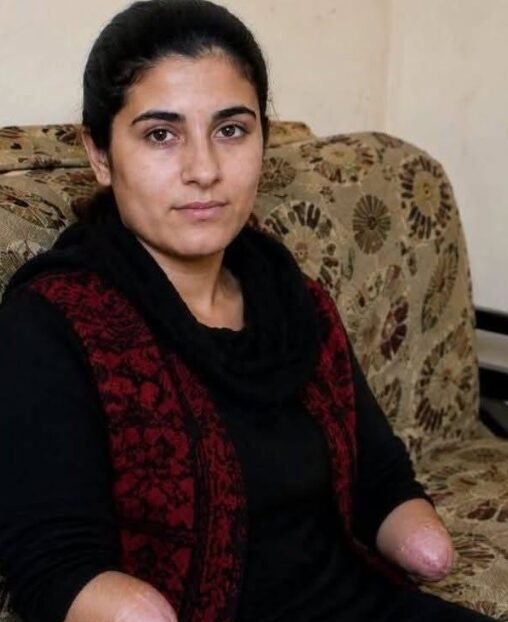
PART 3: The Legacy of the Handless Iron Woman
I returned to my village not as a victim, but as a symbol of defiance. However, symbols still need to eat, dress, and live. I refused to let anyone pity me, so I began the grueling process of relearning how to navigate the world. I trained my body to use my feet and my mouth for everyday tasks. With agonizing patience, I learned to write by holding a pen between my teeth. I learned to cook, to clean, and to manage a household using custom-made tools that local blacksmiths created for me, inspired by my story.
As the years passed, my home became a sanctuary. Women from all over the country who were suffering from abusive marriages began to travel to my village. They came to seek advice, to find shelter, or simply to look at the woman who had survived the unthinkable. I established a foundation using the donations that had poured in during the trial, dedicated to providing legal aid and safe houses for women fleeing domestic hostility.
I became known across the nation as the “Iron Bride” or “The Woman of the Field.” Decades later, a prominent sculptor created a bronze monument in the city square depicting a woman reaching toward the sky with invisible, powerful hands—a monument dedicated to my journey.
Mehmet Ali died inside the gray walls of a prison cell, forgotten by the world. But my name, Ayşe, became etched into the history books of our country, taught to school children as a lesson in unbreakable human dignity. He took my hands because he wanted to make me powerless, but in doing so, he inadvertently gave me a voice that changed the laws of the land forever. I proved that a cruel man can break a body, but he can never touch the strength of a soul that refuses to be defeated.