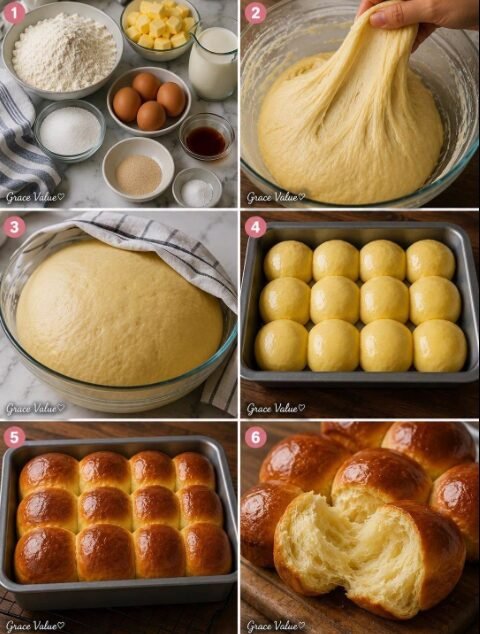
Mastering a soft brioche recipe comes down to understanding enriched dough physics and lipid emulsification. Dense bread happens when gluten structures are either under-kneaded or weighed down by fats introduced too early in the mixing process.
Adding softened butter slowly after the initial gluten matrix has formed allows the protein strands to coat themselves in fat without breaking down completely. This unique structure captures carbon dioxide gas released by yeast during proofing, producing airy, feather-light layers inside every roll.
Benefits of Baking Fresh Enriched Bread at Home
- Unmatched Texture and Flavor: Delivers a rich, buttery crumb that store-bought loaves simply cannot replicate.
- No Artificial Preservatives: Complete control over wholesome, natural ingredients without synthetic dough conditioners. 🌿
- Versatile Kitchen Staple: Ideal for breakfast rolls, gourmet sliders, or leftover French toast.
- Stress-Relieving Activity: The tactile process of kneading enriched dough offers therapeutic baking comfort.
Crucial Baking Mistakes to Avoid
Even seasoned bakers make minor errors that can ruin the delicate crumb structure of an enriched loaf:
- Using Cold Eggs or Butter: Cold ingredients shock the yeast and slow down rising times significantly. Always bring eggs and butter to room temperature.
- Overheating the Milk: Liquid hotter than 115 degrees Fahrenheit will kill active yeast cells, preventing dough expansion.
- Adding Excess Flour: If the dough feels sticky, avoid adding cupfuls of flour; brioche dough requires high moisture for supreme softness. ⚠️
Essential Metrics for Perfect Bread Baking
| Baking Metric | Recommended Value / Guideline |
|---|---|
| Yeast Activation Temp | 100 to 110 degrees Fahrenheit |
| Baking Temperature | 350 degrees Fahrenheit |
| First Proof Duration | 90 to 120 minutes (until doubled) |
| Butter State | Softened room temperature (not melted) |
Storage & Freshness Tips for Enriched Rolls
To keep your rolls soft and tender for days, store fully cooled brioche in an airtight container or sealable plastic bag at room temperature for up to 4 days. Avoid storing fresh bread in the refrigerator, as cold temperatures cause starch retrogradation, making the crumb dry and stale faster.
For longer preservation, freeze individual rolls in airtight freezer wrap for up to 3 months. Thaw frozen rolls at room temperature and warm them in the oven at 300 degrees Fahrenheit for 5 minutes before serving.
Frequently Asked Questions (FAQ)
Why did my soft brioche recipe turn out dense instead of fluffy?
Dense texture usually occurs when yeast is inactive, dough is under-kneaded before adding butter, or the second rise time was cut too short.
Can I make the dough ahead of time?
Yes! After shaping the dough or during the first proof, you can refrigerate it overnight to let it rise slowly, which actually enhances flavor.
Should I use bread flour or all-purpose flour?
Bread flour yields slightly more structure and height due to higher protein content, but all-purpose flour works wonderfully for a tender, melt-in-your-mouth crumb.
Say goodbye to heavy, crumbly loaves and enjoy the unmatched delight of baking soft, golden rolls that pull apart effortlessly!