
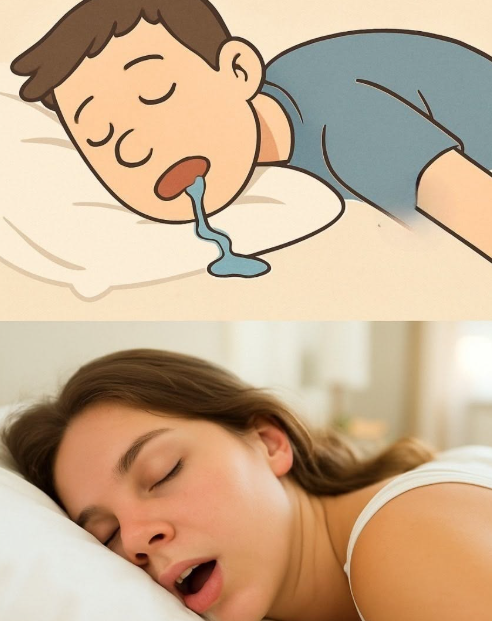
Drooling during sleep is common, especially in children and in certain sleeping positions. However, if it occurs frequently, suddenly, or in large amounts in adults , it could be a sign of an underlying health problem.
Occasional drooling is normal, but persistent drooling – especially when accompanied by other symptoms – should not be ignored. Here’s what you need to know.
6 possible health problems associated with frequent nighttime drooling
1. Mouth or dental problems
- Complaints: Gum inflammation, tooth infections, poorly fitting dentures, misaligned teeth.
- Reason: Inflammation or discomfort in the mouth can stimulate excessive saliva production and make swallowing difficult during sleep.
- Signs: Reddened gums, toothache, bad breath, visible plaque or swelling.
2. Weakness or paralysis of the facial nerve (e.g., Bell’s palsy)
- Reason: Weakness or paralysis of one side of the face can impair the ability to close the lips and swallow saliva effectively.
- Signs: Drooping of one side of the face, difficulty closing one eye, asymmetrical smile, slurred speech.
3. Gastroesophageal reflux disease (GERD)
- Reason: When stomach acid rises into the esophagus, this can trigger a reflex increase in saliva production as the body tries to neutralize the acid.
- Symptoms: Heartburn, sour taste in the mouth, nighttime cough, chest discomfort.4. Neurological diseases (Parkinson’s disease, MS, ALS)
- Reason: These diseases can affect the nerves and muscles responsible for swallowing (dysphagia), which leads to saliva accumulating and leaking during sleep.
- Signs: Tremors, stiffness, balance problems, changes in speech or coordination, progressive weakness.
- Why: Mouth breathing during sleep – common in sleep apnea – can lead to increased salivation. This is often a sign of narrowed airways in the nose or throat.
- Signs: Loud snoring, shortness of breath at night, daytime fatigue, morning headaches.
- Reason: A blockage or bleeding in the brain can impair muscle control, including the swallowing and facial muscles. This can lead to excessive drooling on one side during sleep.
- Signs: Sudden drooping of the face, weakness in the arm, slurred speech, confusion, dizziness. This is a medical emergency.
