
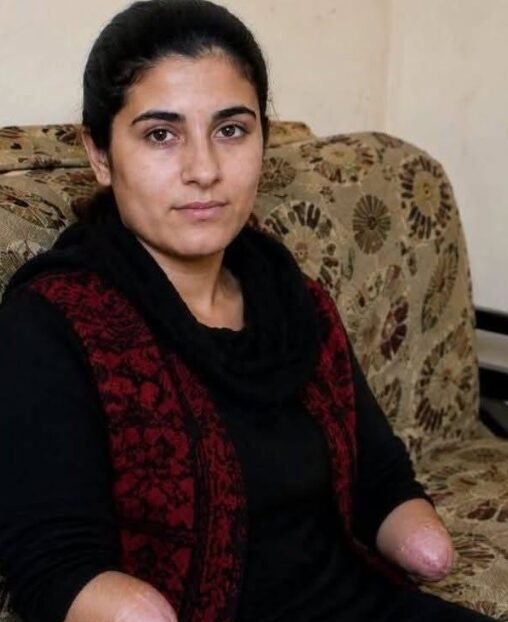
The white ceiling of the hospital room was the first thing I saw when the darkness finally lifted. The air smelled of antiseptic and iron. For a few seconds, I forgot the field. I tried to raise my hand to wipe the sweat from my forehead, but nothing moved. When I looked down at the heavily bandaged stumps where my arms ended, the reality of my new existence crashed over me like an avalanche. The village doctors whispered outside my door, their voices thick with pity. “A tragedy,” they said. “The poor girl is ruined. Who will care for a woman who cannot even feed herself?”
In our culture at the time, a woman without hands was viewed not just as a victim, but as a permanent burden. My husband, Mehmet Ali, had calculated this perfectly. He believed that by taking my hands, he had stripped away my agency, my dignity, and my future. He assumed I would hide away in my family’s home, consumed by shame, until I quietly faded from the world’s memory. For the first few days, the grief almost swallowed me whole. I wept until my eyes were raw, mourning the simple things: the ability to braid my own hair, to bake bread, to hold a cup of water.
But as the physical pain began to dull, a fierce, white-hot anger took its place. Every time a relative visited and looked at me with tearful, hopeless eyes, my resolve hardened. Mehmet Ali wanted me to be a ghost, a warning to other women to stay submissive. I realized that if I remained silent, he would win.
I called for the local gendarmerie and a prosecutor. When they entered the room, expecting a broken, weeping girl, I looked them in the eye. My voice did not tremble. I recounted every single detail of that walk to the field, the cold look in my husband’s eyes, and the final words I spoke to him before the blade fell. I demanded a full trial. News of my survival and my refusal to hide began to ripple out of our small village, traveling from mouth to mouth until it reached the desks of journalists in the capital. The silent bride was silent no longer.
