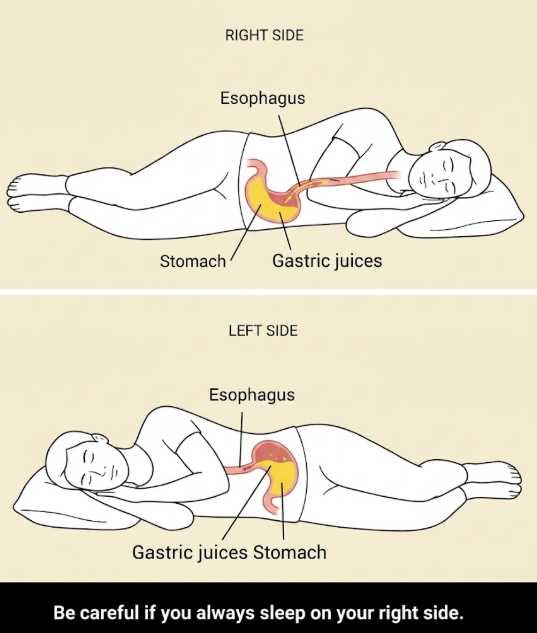
Be careful if you always sleep on your right side: Hidden risks revealed
Be careful if you always sleep on your right side, because this common nightly position might secretly be aggravating your acid reflux, slowing your digestion, and disrupting your overall cardiovascular wellness 🌙. Waking up in the middle of the night with a burning chest, a sour taste in your mouth, or an uncomfortable sluggish feeling in your abdomen is more than just bad luck after dinner. The way you position your torso while resting exerts direct mechanical pressure on your internal organs, altering gravitational fluid dynamics in surprising ways. Understanding why you should be careful if you always sleep on your right side unlocks the key to transforming your nocturnal comfort and waking up deeply restored every morning.
Sleep is designed to be the ultimate restorative state for your body, a period where your gastrointestinal system, brain, and cardiovascular network recover from daily strain. However, your internal anatomy is fundamentally asymmetrical, meaning that resting on one side of your body creates entirely different physical conditions than resting on the other. While most people choose their sleeping posture purely based on habit or surface comfort, modern physiological research demonstrates that biomechanics play a decisive role in overnight health.
The Biomechanics of Sleep Posture and Gastric Physiology
To understand why health professionals warn to be careful if you always sleep on your right side, we must analyze the spatial orientation of the stomach and the lower esophageal sphincter. The human stomach is an asymmetrical, pouch-like organ curved toward the left side of the upper abdominal cavity. The esophagus connects to the stomach at a specific angle, regulated by a muscular ring known as the lower esophageal sphincter, which acts as a one-way valve to prevent gastric juices from flowing backward.
When you lie down on your right side, the stomach pouch is elevated above the lower esophageal sphincter. This position allows caustic gastric acid and digestive enzymes to pool directly against the delicate valve. Under the continuous pull of gravity, gastric fluids can easily seep through the valve into the sensitive lining of the esophagus, triggering acute heartburn, nocturnal acid reflux, and chronic tissue irritation. Conversely, resting on the left side keeps the stomach pouch below the esophageal junction, keeping digestive fluids contained safely at the bottom of the organ.
Key Health Effects of Resting Exclusively on Your Right Side
Recognizing how spatial organ alignment impacts bodily systems helps you make conscious, supportive choices before drifting off to sleep. Being aware of these biomechanical realities ensures you take active steps toward better health.
Here are the primary physiological impacts associated with continuous right-side resting:
- Increased Acid Reflux Episodes: Gravity pushes acidic gastric juices straight toward the lower esophageal sphincter, increasing heartburn intensity.
- Delayed Gastric Emptying: The natural curvature of the stomach can slow down the passage of food waste into the small intestine.
- Pancreatic Pressure and Digestive Slowdown: Resting on the right side can place slight physical pressure on the pancreas, hindering enzyme flow.
- Impaired Lymphatic Drainage: The body’s primary thoracic duct drains lymphatic fluid toward the left side, making left-side resting more efficient for metabolic waste removal.
As these physiological factors demonstrate how simple adjustments dramatically influence internal organ function, discovering the exact nighttime routine to realign your sleeping posture reveals the ultimate health secret ….👇👇