
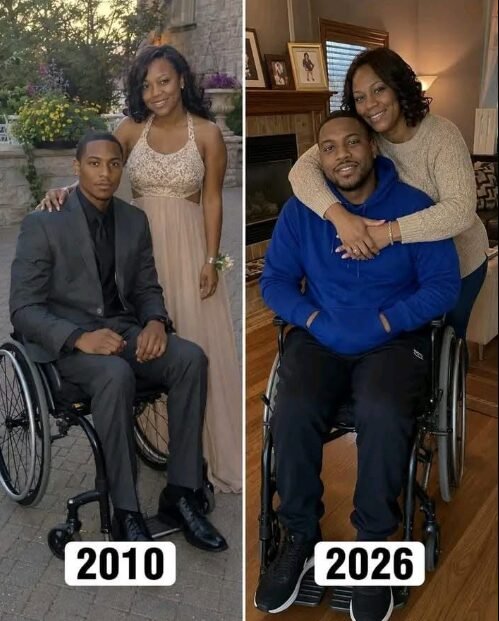
The kitchen air felt thick, suffocating, and heavy with a sudden, bitter cold that seeped deep into my bones. My eyes blurred as I stared down at the crisp white pages in my hands, the official legal seal at the top glowing like a warning flare under the recessed ceiling lights. My mother, the woman I had spent fifteen years resenting for her coldness and heartless abandonment, stood beside the kitchen island with her arms folded tightly across her chest, her sharp corporate breathing echoing off the granite countertops. Beside her sat my husband in his wheelchair, his head bowed so low his chin nearly touched his chest, his knuckles white as he gripped the armrests in absolute, paralyzed silence. I tried desperately to focus on the black ink swimming across the page, my brain frantically attempting to make sense of police department headers, court docket numbers, and a series of notarized financial affidavits that dated back to the exact week of his life-altering accident.
The documents were not medical records or bills from his long rehabilitation; they were criminal investigation reports and a confidential civil settlement agreement. According to the certified police ledger, the snowy night my high school sweetheart was paralyzed, he hadn’t been driving to his grandparents’ house to deliver holiday gifts as he had claimed for fifteen long years. He had been driving home from an illicit, high-stakes drag race on an icy back road—a reckless event he had organized himself—in a stolen vehicle, completely intoxicated and traveling at over eighty miles per hour. Even more horrifying was the second page, which revealed that my parents had not cut me off out of cruel, superficial elitism because he was disabled, but because he had spent the days following his surgery actively trying to frame my younger brother for the crash to avoid criminal charges and preserve his own reputation.
My knees gave out, forcing me to sink heavily onto a wooden dining chair as fifteen years of my life began to rewrite themselves in real-time. I remembered the fierce, tearful arguments with my father, the way my mother had looked at me with what I thought was cold disdain, and the absolute isolation I had felt when I walked away from my family to devote every waking hour to his care. My parents had refused to enable a reckless young man who had tried to ruin their son’s future to save himself, yet they had stayed silent for fifteen years because my husband had threatened to expose a sensitive, manufactured scandal about their legal practice if they ever revealed his attempted betrayal to me. I had traded my trust, my inheritance, my college dreams, and my relationship with my mother for a man whose entire heroic, tragic persona was constructed on a foundation of sociopathic manipulation and calculated deceit.
I looked up from the papers, my voice catching in my throat as a wave of pure nausea washed over me, my eyes locking onto the man I had bathed, dressed, and loved unconditionally through every hardship. He raised his trembling hands, tears streaming down his pale cheeks, whispering that he had only lied because he was terrified of losing me and that he had changed into a better man over the last decade and a half. But my mother stepped forward, resting a firm, warm hand on my trembling shoulder, and pulled a second blue folder from her leather briefcase with an expression of grim, uncompromising finality. As she opened the folder to reveal a final set of recent bank statements, the terrifying truth in Part 3 would prove that his betrayal didn’t end fifteen years ago—it was still happening today…
