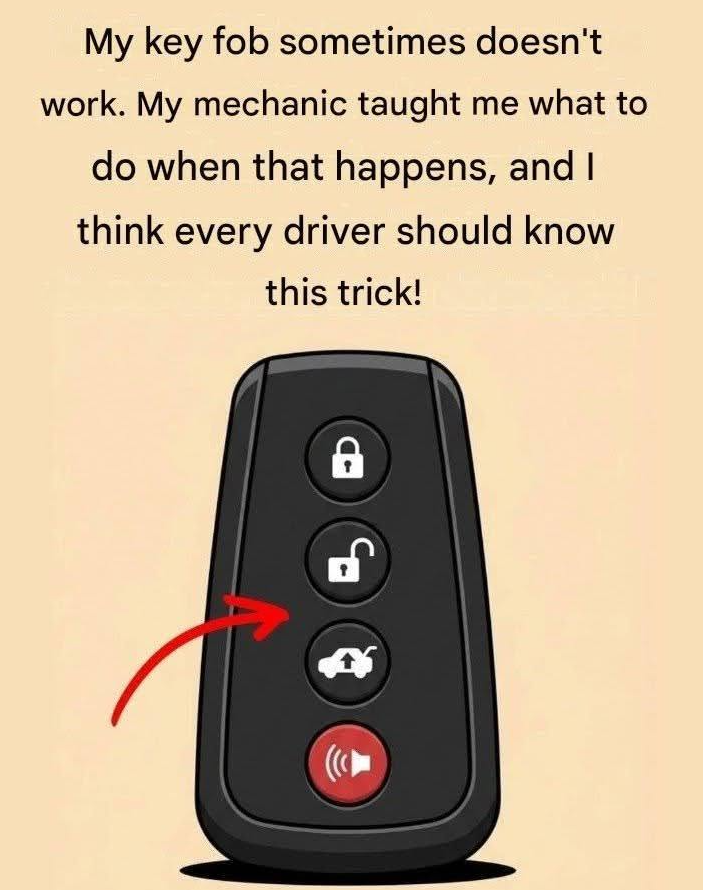
My key fob sometimes doesn’t work: The mechanic trick every driver should know
My key fob sometimes doesn’t work, leaving you stranded in a busy parking lot with a car that completely refuses to respond 🚗. Standing outside your vehicle while repeatedly pressing the unlock button can instantly spike your stress levels, especially when you are running late or caught in bad weather. Most modern drivers assume that a unresponsive remote means an expensive towing bill, a dealer repair visit, or a completely dead vehicle system. Discovering the exact mechanic-approved trick when my key fob sometimes doesn’t work gives you total control, allowing you to unlock and start your car in seconds without paying a single dime.
Automotive technology has advanced rapidly, replacing traditional mechanical keys with sophisticated smart fobs, push-button start systems, and proximity sensors. However, these wireless systems rely heavily on radio frequency signals and small internal batteries that gradually lose power over time. Understanding why your vehicle remote experiences intermittent signal drops empowers you to troubleshoot the issue instantly on the spot.
Understanding Why My Key Fob Sometimes Doesn’t Work
To understand why my key fob sometimes doesn’t work, we must examine how wireless remote entry systems communicate with your car’s receiver module. Remote entry devices broadcast low-frequency radio signals that are picked up by an antenna hidden inside the vehicle’s body control unit.
When the internal coin-cell battery voltage drops slightly below required operational levels, the transmitter signal becomes weak and erratic. Environmental factors such as nearby cell towers, high-voltage power lines, or metal shielding can also block the weak signal. Recognizing these electrical realities helps you bypass signal interference effortlessly using built-in hidden mechanical overrides.
Essential Steps When My Key Fob Sometimes Doesn’t Work
Navigating an unresponsive vehicle remote requires knowing where auto manufacturers conceal backup physical entry points. Being aware of these clever design features ensures you never get locked out of your automobile.
Here are the primary built-in features to check when dealing with a faulty remote:
- The Hidden Emergency Mechanical Key: Release the small slide catch on the back or side of your remote casing to pull out a physical metal key blade.
- Concealed Door Lock Cylinder: Remove the plastic decorative cap located on the driver door handle to expose the hidden physical keyhole underneath.
- Low Battery Signal Amplification: Holding the plastic casing directly against your chin or skull uses your body as a natural antenna extension to boost signal range.
- Push-Button Ignition Backup Receiver: Holding the remote housing directly against the Start Engine button sends an induction signal to start the car even with a dead remote battery.
As these engineered backups demonstrate how car companies plan for dead batteries, discovering the precise mechanic trick to start your engine instantly changes everything ….👇👇